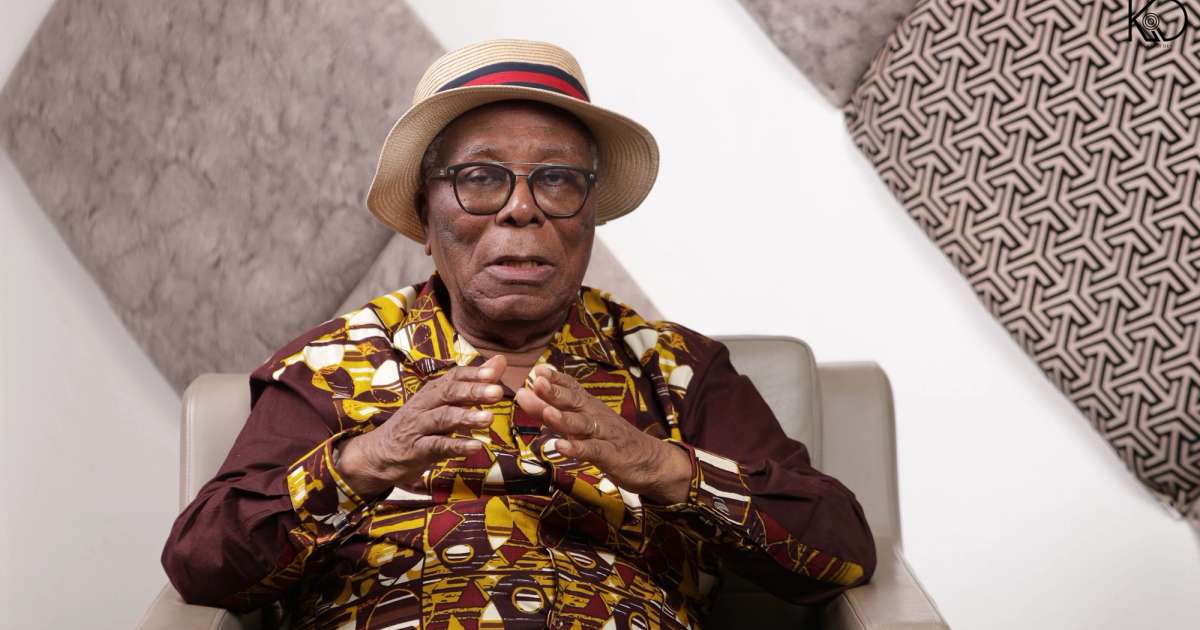
Ghana’s fight against illegal mining will remain ineffective if enforcement agencies continue to arrest small-scale operators while the powerful individuals financing the operations remain untouched, former Head of the Civil Service, Dr Alex Glover, has warned.
He argues that the country is concentrating its efforts on the wrong people, allowing those who finance and equip illegal mining operations to escape scrutiny while vulnerable workers at mining sites bear the consequences.
In an interview with broadcaster Kafui Dey, Dr Glover questioned the effectiveness of Ghana’s approach to tackling galamsey, insisting that the real people behind the activities are those who provide the money and machinery.
“Stop chasing the small boys like we are doing,” he said.
He explained that many of the people arrested at illegal mining sites were merely workers who received small payments to dig for minerals, while the financiers who supplied the heavy equipment continued operating behind the scenes.
“We say galamsey and they go and catch these boys who know next to nothing about. They are paid small amounts of money to go and dig and get, and the big ones who pay for the big machines, they are there,” he said.
Dr Glover questioned why the individuals importing the machines used for illegal mining were not being pursued with the same determination as the people operating them.
“Everybody knows them, should know them, because those machines are imported by the big guns and nobody talks about them,” he added.
For him, the apparent failure to go after these powerful interests undermines the credibility of the country’s anti-galamsey campaign.
“And then we say we are fighting galamsey. Everybody knows it’s a joke. It’s a joke,” he said.
He contrasted the situation with Singapore, which he described as a country that does not treat corruption lightly and is willing to pursue powerful individuals rather than concentrate on lower-level offenders.
“They don’t joke with issues like that, and they leave the small guys and go for the top ones,” he said.
He cited Singapore’s approach to public accountability, explaining that its leadership had established a culture in which nobody was considered above scrutiny, regardless of personal or political connections.
According to him, even when a minister was suspected of corruption, investigations were allowed to proceed rather than being stopped because of the person’s relationship with those in authority.
Dr Glover said this demonstrated the importance of political will in confronting corruption and ensuring that the law applied equally, irrespective of an individual’s position or influence.
He believes Ghana must adopt a similar determination if it genuinely wants to eliminate practices such as illegal mining.
“If we want to really get rid of certain vices, we better start really fighting,” he said.