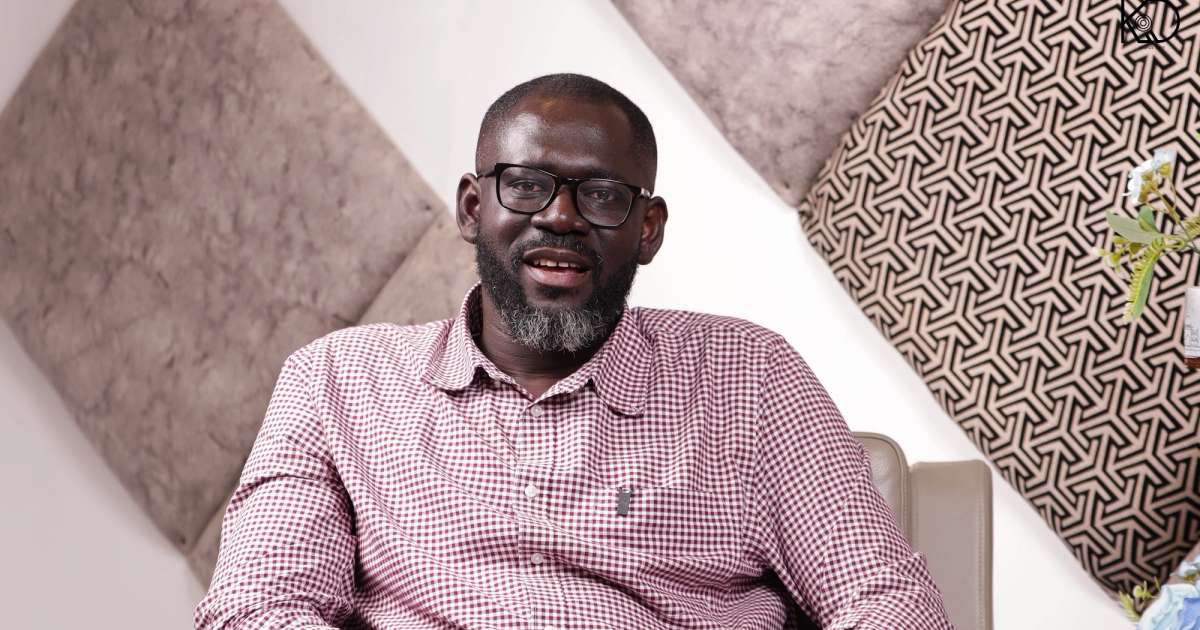
For years, Dr George Asiamah kept one chapter of his life almost completely hidden.
Long before the Oxford photographs, academic achievements and the title “Dr” came the shoeshine box.
It was a chapter he was once too embarrassed to talk about; a period marked by failed attempts, disappointment and a six-year break from university.
Today, however, Dr Asiamah sees that same period differently.
“The box really made me,” he said in an interview with Kafui Dey.
His journey to becoming an Oxford lecturer was anything but conventional.
After his Senior Secondary Certificate Examination (SSCE) results dashed his hopes of immediately continuing his education, Dr Asiamah tried several ways of making a living.
He hawked second-hand clothes in Kumasi, selling both men’s and women’s clothing around the Railway area.
But the business did not work out.
“I failed there as well,” he recalled.
His difficulty, he explained, was that he could not sell at the high margins his more experienced colleagues managed to command.
“They have sweet mouth,” he said, explaining that some hawkers could sell one item at a significant profit, while he often added only a few cedis to the price.
Then came shoeshining.
Boys from his village had traditionally travelled to Accra to learn shoemaking and returned home appearing to have made decent money from the trade.
Although Dr Asiamah did not know how to properly repair shoes, he decided to try his luck.
“I started doing shoeshine without knowing the actual work,” he said.
His lack of experience sometimes produced less-than-perfect repairs.
If a customer’s shoe had opened up badly, he would apply glue and attempt to fix it. But unlike experienced shoemakers who reinforced the repair with thread, he did not know that extra step.
“I know that if I leave it within three days, it would tear again,” he admitted.
Where he excelled, however, was polishing.
His routine was simple but effective: remove the dust with a rag, apply polish, brush it and bring out the shine.
“That one was easier,” he said.
And surprisingly, the shoeshine business was not merely a survival job. It was financially better than the alternative he later chose.
At the time, he could make about GH¢10 a day, eventually taking home roughly GH¢250 a month.
Because he lived with his uncle and did not have to pay rent, he could meet his basic needs and even save some money.
But money was not the only measure by which he judged the job, shame was.
Dr Asiamah had been regarded in his village as a bright child, “wise” and a top student. He had often been the one called upon to read for others.
Now, after his academic setback, he found himself doing work he believed people from home would look down on.
“I was embarrassed by being a shoeshiner,” he admitted.
To avoid people who knew him, he deliberately worked away from central Accra, around the Dome-Kwabenya area, while living with his uncle at Tantra Hills.
The strategy worked, at least physically.
“Nobody saw me because of the routes that I was using,” he said.
But eventually, rumours reached his village.
His mother knew.
And she was disappointed.
At the time, Dr Asiamah felt as though his educational journey had ended. His mother repeatedly encouraged him to go back and collect his results, but he had lost hope in education.
“I didn’t know any future in education at the time,” he recalled. “It seems like it was over for me.”
Ironically, the job that embarrassed him was teaching him lessons that would later prove invaluable.
Dr Asiamah described his shoeshine boss as one of the people who taught him “street-level economics” — lessons he says went beyond what he would later encounter in the classroom.
The GH¢250 he earned had to be managed carefully.
Even when he eventually left shoeshining for a shop attendant’s job at Kantamanto, the financial reality became even clearer.
He was paid just GH¢70 a month.
That meant he had abandoned a job that could bring him about GH¢250 a month for one that paid GH¢70.
Looking back, he describes it as a decision he now analyses almost like an economics problem.
“I ended up doing economics and thinking about it, whether it was a rational decision,” he said.
The six-year period between his examination results and his return to university became a winding road: hawking in Kumasi, shoeshining in Accra and eventually working at Kantamanto.
But the story did not end there.
He eventually returned to university, completed his studies and pursued an academic career that would take him far beyond the streets where he once polished shoes.
Yet, for him, the shoeshine box remains more significant than the Oxford photographs.
“People may see the Oxford pictures,” he said, “but I think what really made me was actually the box.”
The experience built resilience in him — a quality he believes has helped propel him to where he is today.
“The resilience that I built that has pushed me to wherever I am now, it was actually from the shoeshine box.”
The physical box itself is no longer around.
He had kept it at his uncle’s house, hoping to preserve the object that represented such an important part of his journey. But the wood deteriorated and could not be kept.
“It’s gone,” he said.
The box may have disappeared, but its lessons remain.