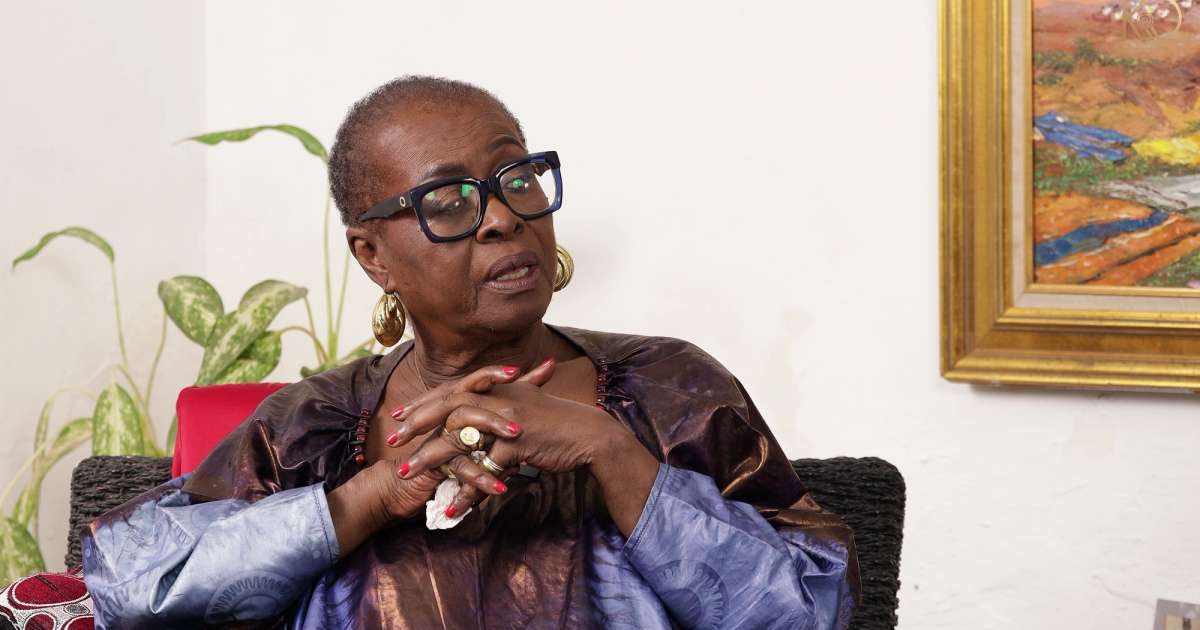
With nearly eight decades of lived wisdom spanning pre-independence West Africa to the hyper-connected digital age, Miatta Fahnbulleh views modern societal shifts with a deeply critical, observant eye.
During her dialogue with Kafui Dey, she voiced profound alarm regarding the rising Generation Z and the younger youth, focusing on how screen addiction and digital devices are systematically eroding the foundational social structures of African community life.
According to Miatta Fahnbulleh, the fundamental unit of traditional African character-building was the multi-generational household, where children sat at the feet of their grandparents to learn history, folklore, moral boundaries, and social etiquette.
Today, she observes that busy parents routinely substitute human interaction with electronic tablets, handing toddlers iPads and smartphones simply to keep them quiet and occupied.
She argues that this reliance on technology has created a generation that is technically proficient with software, yet dangerously lacking in basic social etiquette, emotional empathy, and real-world human connection.
"They are living so much on this machine, they are losing social etiquette or social cohesion like we knew it-dealing with human beings, dealing with human beings," Miatta Fahnbulleh disclosed during the interview.
"They are all on the machines... we are all on the machine, and even some adults are getting into that."
"In our time, you sat at the feet of your grandparents. They gave you identity, they gave you discipline, they gave you warmth," Miatta observed, highlighting the stark contrast with modern upbringing.
"Today, what do we see? The iPad has literally replaced the grandparent. Children are growing up connected to a machine, but completely disconnected from human touch, from their culture, and from basic human feeling."
Miatta warned that if African society continues to allow screens to replace elders as the primary source of early childhood mentorship, the continent risks losing its unique cultural identity and the rich oral tradition that has sustained its communities for millennia.