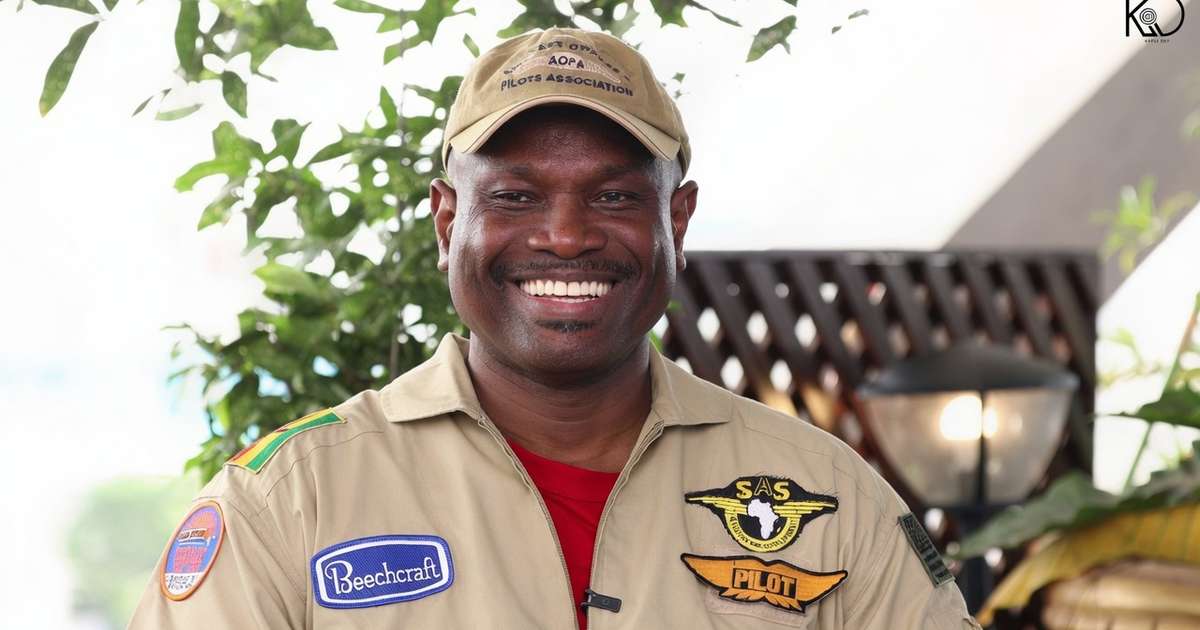
Ghanaian pilot and aviation advocate Captain Asiwome Dzakuma has described Ghana’s general aviation sector as largely undeveloped, warning that the country is missing significant economic opportunities while stressing that the industry could create thousands of jobs for young people.
Captain Asiwome, a first officer on the Boeing 787 Dreamliner with United Airlines, said general aviation remains one of the most overlooked areas of Ghana’s aviation industry despite its potential to support sectors such as agriculture, tourism, healthcare, transportation and emergency services.
Speaking in an interview with Kafui Dey, he said Ghana must move beyond focusing only on commercial passenger airlines and begin developing the wider aviation ecosystem.
“General aviation in Ghana is almost non-existent,” Captain Asiwome said.
He explained that general aviation refers to all aviation activities outside commercial airlines and military operations, including recreational flying, air taxi services, medical evacuation, agricultural aviation, aviation training and other specialised operations.
According to him, the limited development of the sector has denied many young Ghanaians access to diverse career opportunities within aviation.
“There are lots of Ghanaians who want to train in aviation, not particularly pilots,” he said. “So we need to develop our general aviation industry to give them opportunity.”
Captain Asiwome said a thriving general aviation sector would require professionals beyond pilots, creating jobs for people in different fields including aircraft maintenance, dispatch, communication, law, agriculture and technology.
“Once you get into general aviation, you are opening the channels for people in communication, lawyers, I mean, name it, all fields,” he said.
“Maybe even a wider field than even the airlines can offer.”
The pilot made the comments while discussing the objectives of the Arise and Fly campaign, an initiative by Strategic Aviation Services aimed at promoting general aviation as a driver of national development.
He said the campaign is focused on advocacy, volunteerism, training and practical application to ensure Ghana builds the human resource needed to grow the sector.
“We are not just going to be talking about it,” he said. “What we do most in this country is we talk, talk, talk, no action. We are also guilty of it.”
Captain Asiwome disclosed that one of the organisation’s goals is to establish a general aviation training institution to develop skilled personnel for the industry.
“We want to set up a general aviation training institution to train pilots, not only pilots, but personnel for general aviation operations here,” he said.
He explained that the sector could also transform industries such as agriculture through the use of aircraft for spraying, surveillance and extension services.
“You know, we boast of cocoa production, but most of our cocoa spraying is still done by back sprayers, and you can imagine how long it takes,” he said.
“If you have these general aviation planes, within an hour, the whole farm will be sprayed, and it’s even more effective.”
Captain Asiwome pointed to countries such as the United States, Kenya and Tanzania as examples of places where general aviation has contributed to economic growth, tourism development and job creation.
“General aviation is being maximized in the US,” he said. “And now East Africa particularly is harnessing their general aviation industry for growth.”
He urged policymakers and aviation stakeholders to collaborate in creating a roadmap to unlock the sector’s potential.
“The way forward will be to collaborate with people in the industry, organisations like ours and others, to actually sit and draw a comprehensive roadmap to untapping our general aviation industry,” he said.
Captain Asiwome believes developing general aviation will not only strengthen Ghana’s aviation sector but also provide new opportunities for the country’s growing youth population.