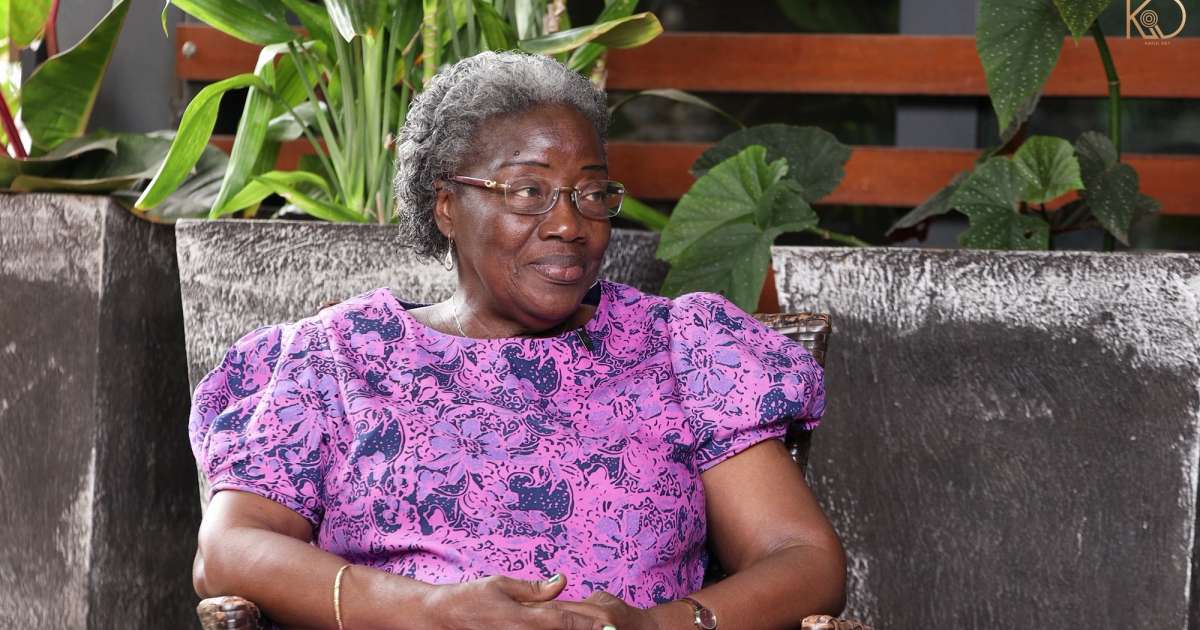
For Mrs. Matilda Amissah-Arthur, grief was not confined to the days immediately following the death of her husband, former Vice President Kwesi Amissah-Arthur.
It followed her into familiar places.
It followed her into routines they once shared.
And for a long time, one of the biggest reminders was the gym.
Speaking in an interview with Kafui Dey, Mrs. Amissah-Arthur opened up about how the sudden death of her husband affected her daily life and why she eventually had to stop going to the gym.
Her husband had collapsed at the gym after going there with her.
According to her, the suddenness of the death made the experience particularly traumatic.
“He just woke up. They said he was going to the gym. I went with him. We all go to the gym together,” she recalled.
She said he collapsed while at the gym and was taken for medical attention.
At one point, she was told that he had been stabilized.
Then, about 45 minutes later, the devastating news came.
“They said, ‘We stabilized him.’ Everything. 45 minutes after they come and say he’s dead.”
The experience left her struggling with the places and activities associated with him.
Mrs. Amissah-Arthur explained that grief can be triggered by ordinary things that suddenly become connected to the person who has died.
“Things that you used to do with the person who is dead, when it comes, it triggers emotions in you,” she said.
For her, the gym became one of those triggers.
“Anytime I went to the gym, it triggered it.”
She eventually stopped going.
Even her home gym became difficult to use because it brought back memories of her husband.
“I even stopped using my house gym because it will trigger it,” she said.
The problem extended beyond the gym.
She also found it difficult to attend the church her husband used to attend because being there triggered memories.
She could drive past these places, she explained, but actually being in them was different.
The memories were still too close.
But eventually, Mrs. Amissah-Arthur decided she had to confront the trigger rather than allow it to control her.
A few years later, while travelling to Addis Ababa for work, she made a deliberate decision.
“When I was going, I say, ‘Lord, I need to break this thing in a foreign land.’”
She packed her gym clothes and began going to the gym every morning.
This time, she was in a completely different environment, away from the places where the memories had first become painful.
And she said it worked.
“I broke it.”
For Mrs. Amissah-Arthur, the experience reinforced an important lesson about grief: healing can require confronting painful memories rather than permanently avoiding everything connected to them.
“Part of those things is mind over,” she said.
Her story also forms part of the experience behind her work as a bereavement counsellor and author.
She later wrote Strength in the Storm: When a Loved One Dies, after struggling to find practical literature that addressed the experience of grief.
For her, the gym was never simply a gym again.
It became a reminder of loss.
But years later, she found a way to enter that space again without allowing the memory to overwhelm her.