Before the crowds, the sponsorships and the recognition, there were long walks.
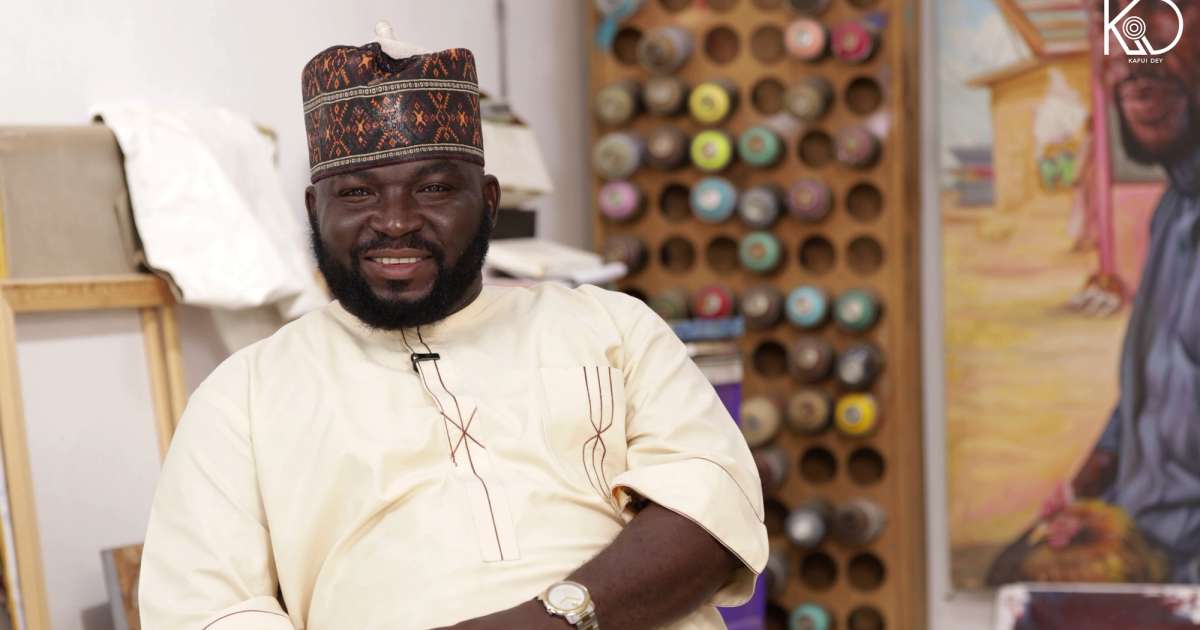
For seven years, visual artist Moh Awudu made the journey from Nima to Jamestown, not because anyone was paying him, but because he believed art could transform a forgotten corner of Accra into something extraordinary.
He was there almost from the beginning of the Chale Wote Street Art Festival, helping shape what would become one of Africa’s most celebrated cultural events. As the lead painter, he poured his energy into murals and public art installations at a time when few people believed the festival would survive.
“I did Chale Wote for 10 years,” he recalled. “I started when it was nothing until it became what it is today.”
Those early years demanded more than artistic talent. They demanded sacrifice.
“There were times there wasn’t even paint,” he said. Instead of giving up, Awudu visited paint companies, carrying samples of his work and asking them to donate acrylic paint so the artists could continue. Money was scarce. Sometimes there was none at all.
“We don’t even get paid,” he said, remembering the years when media coverage was one of the few rewards the artists received.
Still, he kept showing up.
The walk from Nima to Jamestown became part of his routine. Day after day. Year after year. The festival slowly gained momentum, attracting more artists, more visitors and eventually the attention of government.
“I started when it was nothing,” he repeated, reflecting on how the once-small gathering evolved into a national attraction.
As the festival grew, however, so did the complications. Success brought commercial interests, internal disagreements and changing priorities.
“You know Ghana,” Awudu said. “When you start something, people sacrifice because they see the vision. But when things started growing, a lot of problems came.”
The event that had once been fuelled almost entirely by passion gradually became more commercial, with vendors and businesses taking up more space. For Awudu, that shift was bittersweet. He had invested a decade helping build the platform, only to watch it change.
The growing recognition also brought something he never expected: resentment.
“Somebody told me, ‘You shine too much,’” he recalled with a laugh that still carried traces of confusion. “I got confused. What’s wrong with that?”Kafui Dey asked.
For Awudu, the answer has always been simple. His visibility came from commitment, not self-promotion.
“I put a lot of energy into the space,” he said. “People get connected to the energy.”
That energy became contagious. Residents of Jamestown embraced him as one of their own, recognising the artist who had spent years walking into their community, brush in hand, determined to create something meaningful.
His story is a reminder that many of the cultural landmarks people celebrate today were built on invisible labour by artists who worked without salaries, without guarantees and often without recognition.