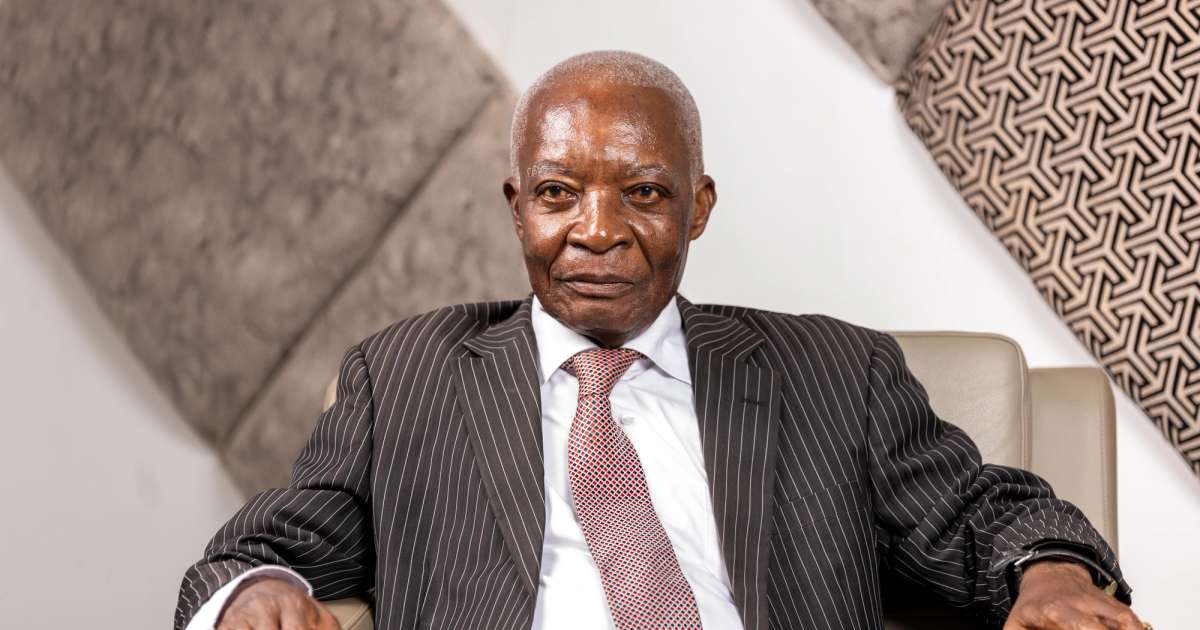
For a man who spent decades navigating Ghana’s public service, rising through the administrative ranks and helping shape institutions responsible for road safety and vehicle regulation, Mr. Amegashie has a rather blunt assessment of the system he served.
“Everything in Ghana is political. It’s political. Our civil service is political.”
It was not a remark made in the abstract. It came from a personal experience that, years later, appears to have left a lasting impression on him.
In 2005, Mr. Amegashie sat for an interview for the position of Chief Director, one of the highest positions a career civil servant could attain. He believed he had performed exceptionally well. By his account, he subsequently learnt that he had placed fifth among approximately 46 candidates.
But the position went to someone else.
When Kafui Dey asked whether his failure to secure the appointment was because of his position on the ranking, Mr. Amegashie was quick to dismiss that explanation.
“No, no, no, no. It was everything Ghana is political. It’s political. Our civil service is political,” he said.
For someone who had invested years in public administration, the disappointment was understandable. Yet, Mr. Amegashie did not present himself as a man consumed by bitterness.
Asked how the experience made him feel, he admitted he was unhappy but appeared to have made peace with the outcome.
“Oh, I wasn’t, you know, happy, but then I said things without remedy should be of no regard,” he explained.
WHEN GOVERNMENTS CHANGE, CAREERS CAN CHANGE
His concerns about the influence of politics on public service were not limited to the unsuccessful Chief Director appointment.
Earlier in his career, Mr. Amegashie had experienced a change in administration that was followed by his removal from the Drivers and Vehicle Licensing Authority (DVLA), where he had been serving.
He recalled that a new administration came into office and that, in December 2001, the then Minister for Transport summoned him and asked a series of questions about the institution’s operations.
The conversation, which took place on December 24, 2001, left him uneasy.
Among the issues raised was why the authority was still using a partially computerised licensing system. He also recalled a proposal involving the installation of traffic cameras at intersections, with the proponents reportedly seeking 80 per cent of the revenue generated.
Mr. Amegashie said he was uncomfortable with the arrangement, explaining that he did not have the authority to determine how such revenue would be shared.
His position, as he recounted it, was that the money went into the Consolidated Fund, with the Ministry of Finance responsible for determining its allocation.
He said the questioning gave him the impression that his position at the authority might be under threat.
“So when I came home, I told my wife that no, it’s likely they’re going to move me from the place,” he recalled.
That suspicion eventually became reality.
On March 5, 2002, a day before Ghana’s Independence Day, he received a letter directing him to move from the DVLA to the Ministry of Transport. He subsequently handed over to his successor.
The timing and circumstances of the transfer form part of a wider account of how changes in political administration can coincide with changes in leadership within public institutions.
Mr. Amegashie did not present the transfer as proof of a specific political motive. But his recollection, placed alongside his later experience with the Chief Director appointment, helps explain why he believes the civil service cannot be viewed as entirely insulated from politics.
THE CIVIL SERVANT AND THE GOVERNMENT
Interestingly, Mr. Amegashie’s career also spans periods of significant political change, including military governments.
He entered the civil service in the late 1970s, a period marked by political upheaval. Reflecting on the June 1979 coup and the uncertainty it created, he acknowledged that civil servants could not always be certain about what would happen next.
But his understanding of the civil servant’s responsibility was clear: the work of government had to continue.
Asked how civil servants related to military governments, he explained that their responsibility was to support the institutions in which they worked.
“You only have to work to help the organization that you’re working,” he said.
He further explained that administrative officers were expected to initiate or implement government policies.
“Whatever the government policies are, you as administrative officer or as secretary, you have to initiate or implement them,” he added.