Before road safety became the institutional responsibility of a dedicated national body, its administration in Ghana was closely tied to the Police and the Ministry of the Interior.
But one former public servant believes the system needed a fundamental rethink and he says he was the person who initiated the change.
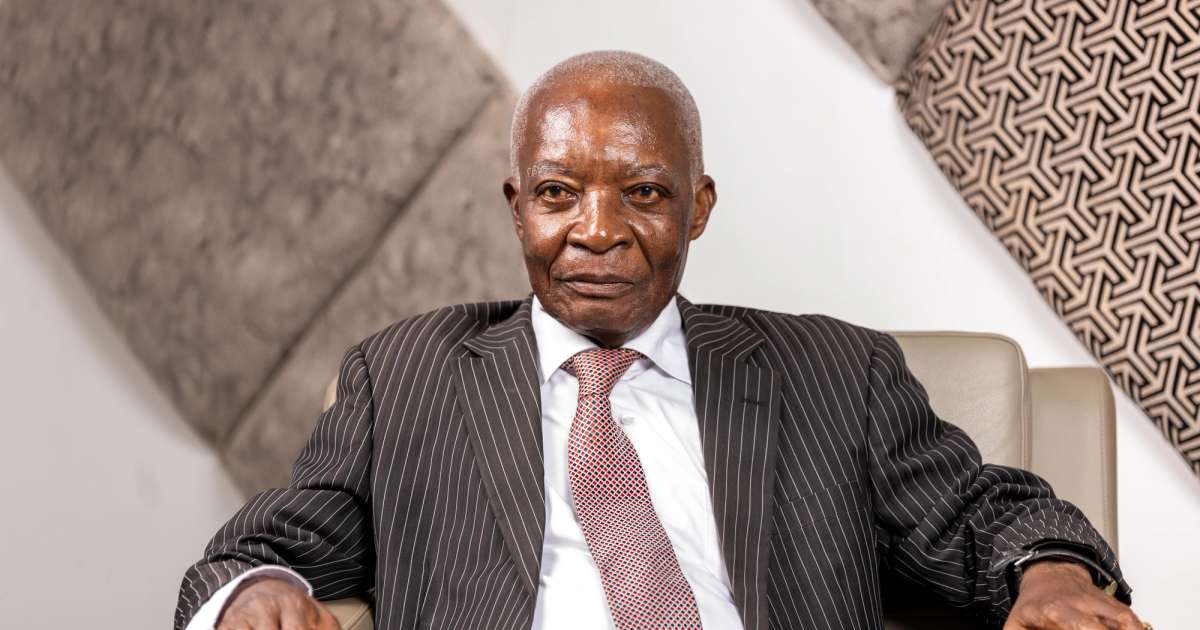
Mr. Amegashie, a former Executive Director of the National Road Safety Committee and a pioneer in Ghana’s road safety administration, has recounted how he pushed for road safety to be recognised as a transport regulatory responsibility and moved away from the traditional policing arrangement.
Asked by Kafui Dey why the PNDC government decided to take road safety away from the Police and allow it to be managed by a civilian-led structure, Mr. Amegashie offered a response that placed him at the centre of the decision.
“No, I was the one who initiated that,” he said.
His argument was rooted in a distinction he believed had not received sufficient attention in Ghana’s approach to transport regulation: road safety was not simply about enforcing traffic laws. It was also about protecting human life, safeguarding health and creating a safer environment for all road users.
THE ARGUMENT THAT CHANGED THE DIRECTION
Mr. Amegashie explained that his understanding of transport regulation had been shaped partly by his academic experience in the United States, where he studied transport regulation as an elective at City College.
He said transport regulation had both economic and non-economic dimensions.
While the economic aspect dealt with matters such as entry, exit and expansion within the transport sector, the non-economic aspect covered safety, health and the environment.
“When you look at the transport regulatory aspect, you have non-economic and economic,” he explained.
He added: “The non-economic requires safety, health and environment.”
For him, this distinction was fundamental to understanding where road safety belonged within government.
Having assumed office in April 1989, Mr. Amegashie said he drew on this understanding to push for a change in the institutional arrangement.
In 1993, he submitted a memorandum to the Ministry of Transport, arguing that road safety should be treated as a non-economic regulatory responsibility rather than primarily an enforcement function.
He said: “In 1993, I sent a memorandum to the Ministry of Transport telling them that safety is a non-economic regulatory. It’s not primarily enforcement, you know.”
But his case did not rest on academic reasoning alone. He also turned to the law.
THE LAW WAS ON HIS SIDE
Mr. Amegashie recalled relying on the Road Traffic Ordinance, 1952, particularly Section 2, which provided for the appointment of a Principal Licensing Officer.
According to his interpretation, the provision indicated that the Commissioner of Police was to perform that responsibility only until a Principal Licensing Officer was appointed.
“That means to say that the Police or Ministry of Interior involvement was temporary, until that appointment comes,” he explained.
For him, the provision offered a legal basis for questioning why road safety administration should remain tied to the Police and the Ministry of the Interior.
He took the argument to the relevant authorities, submitting his memorandum to the then Minister for Transport.
His efforts, he said, eventually yielded a decision at the highest level.
“So by 1994, Cabinet agreed that they should take away the responsibility of Ministry of Interior and Police from National Road Safety,” he recalled.
The decision marked an important step in the institutional journey of road safety administration in Ghana, shifting the responsibility towards the transport sector.
It was not merely an administrative adjustment for Mr. Amegashie. It represented a change in how the country should understand road safety — not just as a matter of catching traffic offenders, but as a broader responsibility involving regulation, prevention, health and environmental considerations.
FROM COMMITTEE TO AUTHORITY
The institutional evolution did not end with the transfer of responsibility.
Mr. Amegashie later became the founding Executive Director of the National Road Safety Committee, an institution that would eventually evolve into the National Road Safety Commission and subsequently the National Road Safety Authority.
During the interview, he also reflected on his contribution to strengthening the institutional framework of road safety administration.
He recalled transforming administrative bodies into legal entities, an achievement he considered particularly significant.
“I was able to transform the two of them to legal entity within one year,” he said, referring to the National Road Safety Committee and the vehicle licensing institution he also helped lead.
Asked what this transformation meant, he explained that legal status gave institutions the authority and clearly defined responsibilities required to carry out their mandates.
“The impact is that it gives them authority and it provides them specific duties to perform,” he said.
The change also meant that the institutions could have their own budgets and exercise greater control over their operations.
For Mr. Amegashie, these were essential foundations for building institutions capable of delivering on their responsibilities rather than operating merely as administrative extensions of government departments.
A LEGACY BEYOND ENFORCEMENT
His argument for moving road safety into the transport sector also reflected a broader philosophy about how Ghana should approach road crashes and their consequences.
He believes road safety must be treated as an investment in human life, not an expense that can be dismissed because of the cost involved.
Reflecting on the long-term benefits of investing in safer roads, he told Kafui Dey that the consequences of road crashes extend far beyond the immediate loss of life.
“When you invest in roads, when you invest in roads, now when accident happen, it is not only people who die,” he said.
He explained that survivors could be left with disabilities, while families could lose their sources of income.
“Some people may become disabled and people’s income will be curtailed,” he added.
His position was that the cost of preventing road crashes should be weighed against the economic and human losses that follow them.
“So let’s value the human lives more,” he urged.
That conviction provides context for the institutional reforms he says he pursued. For him, road safety required more than police enforcement; it needed a coordinated regulatory framework with the authority, resources and mandate to protect people on the road.