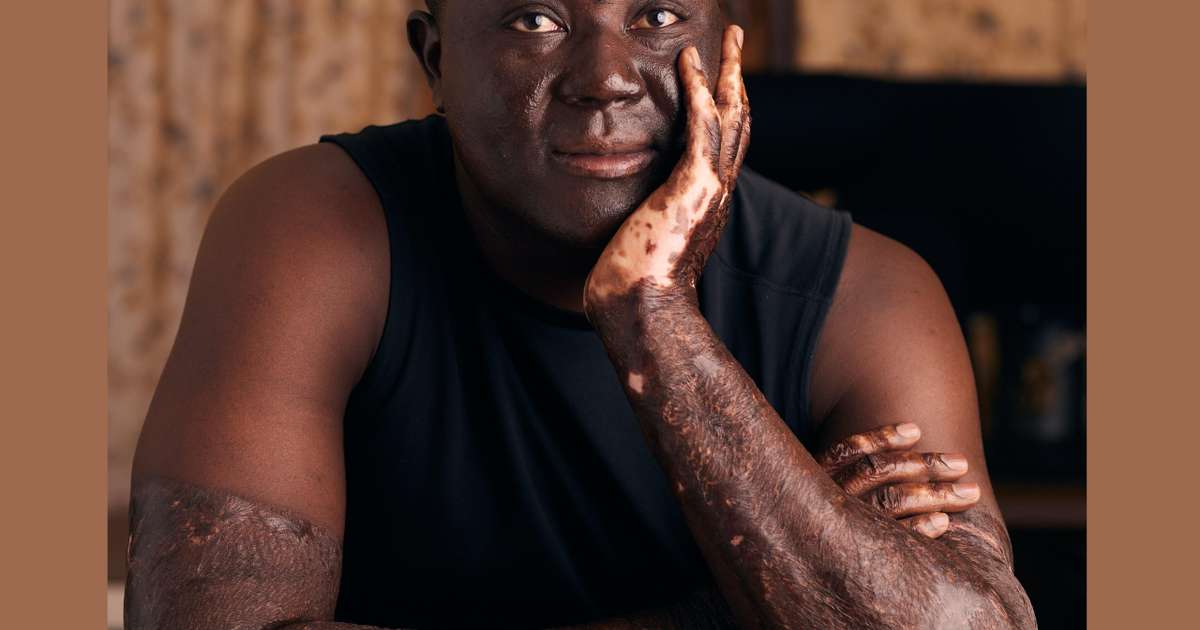
After listening to countless stories of pain, loss and resilience, one might expect Pierre Kuma to admit that some interviews leave him in tears.
Instead, he offers an answer that hangs heavily in the air.
“I think I’ve run out of tears.”
It came after broadcaster Kafui Dey asked a simple question: Have any of your guests ever made you cry?
Pierre paused before answering.
“No, not yet,” he said quietly.
Then he explained why.
Long before he became known as a burn survivor, author, engineer and certified professional coach, Pierre had already cried more tears than he thought possible.
“The beatings they beat me back then… I cried all the tears,” he said with a faint smile. “Then when I had the accident too, at some point I brought some of them. I think I’ve run out of tears.”
He laughed gently after saying it, but the words carried the weight of a man who has endured unimaginable suffering.
Pierre survived 39% percent burns of his body after a gas explosion while he and his wife were expecting their first child. The long road through pain, surgeries and recovery changed not only his body, but also the way he sees other people’s struggles.
Today, he hosts conversations with people whose lives have been shattered by illness, trauma or unexpected tragedy. Yet rather than breaking him emotionally, those stories strengthen his conviction that adversity does not have to be the end.
“I have my story,” he said. “But people also have stories to share.”
For Pierre, the purpose of those conversations is bigger than emotion. It is about giving hope to people who may feel trapped in their own darkest season.
“Sometimes people need to hear this to know that, ‘Look, what I’m going through… yes, I’m going through a valley. There are hard times, but I can get out of it—and I’ll actually come out better.’”
His admission that he has “run out of tears” is not a sign that he no longer feels. If anything, it reflects a life so acquainted with pain that compassion has replaced shock.
Where others might cry, Pierre now listens.
Where others see tragedy, he searches for resilience.
And where others might see an ending, he has learned to look for the beginning of a new story.