Imagine standing in a room in 1954, holding your breath alongside nine of your peers. There are only eight government scholarships on the table to study medicine abroad, and ten of you; the brightest young minds from Achimota, Adisadel, and Cape Coast’s finest schools have been summoned to interview.
By the strict laws of math, two of you are supposed to go home empty-handed. Your dreams of becoming a doctor, of bringing world-class medicine back to a Gold Coast on the cusp of independence, hang entirely on the whims of an interview panel.
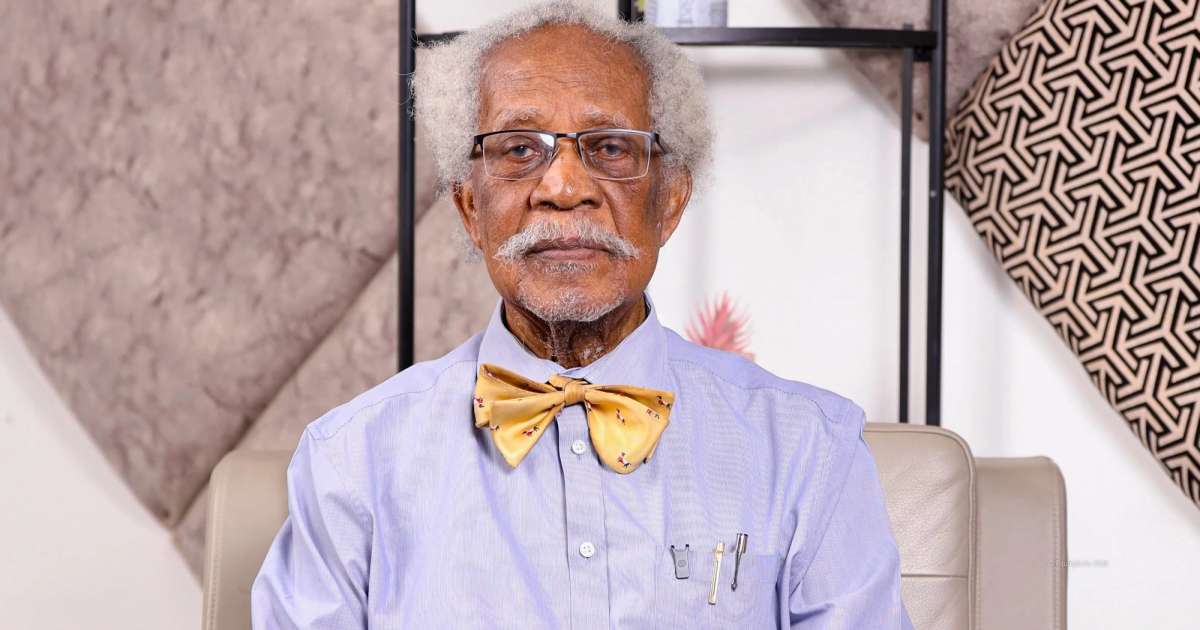
This was the high-stakes reality for a young Bernhardt Kuma.
"I didn't know if I was going to go to medical school," Mr.. Kuma recalls, looking back at that pivotal moment over seven decades ago. "But the scholarship at that particular time in 1954 was for eight students, and ten of us... were interviewed for the eight vacancies."
What happened next is the kind of administrative miracle that changes the course of a nation's history.
Instead of ruthlessly cutting the bottom two candidates, the interview panel sat back, amazed by the sheer caliber of the young men sitting before them. They realized that sending any of them home would be a profound loss. In an act of radical foresight, the panel threw out the rigid quota.
"The people who carried out these interviews recommended that all ten students who had been interviewed should be given scholarships," Mr.. Kuma says.
Instead of eight, ten went.
But the true beauty of this story isn't just that ten young men got to board a plane to study medicine. It is what they did with that opportunity.
In the 1950s, a foreign medical scholarship was often a one-way ticket to a comfortable life in Europe or America. Yet, these ten students carried a deep, unwritten covenant with the homeland that nurtured them.
"I think it's only one person who has never come back to Ghana to practice," Mr. Kuma reflects, a quiet note of pride in his voice.
"The rest of you... you came back to Ghana."
They came back. They built clinics, trained the next generation of Ghanaian doctors, comforted the sick, and laid the very foundations of modern healthcare in a newly independent Ghana.