Kwesi Amissah-Arthur was not dreaming of becoming Ghana’s Vice President.
In fact, when the opportunity eventually came, the former Bank of Ghana Governor reportedly turned it down; not once, but twice.
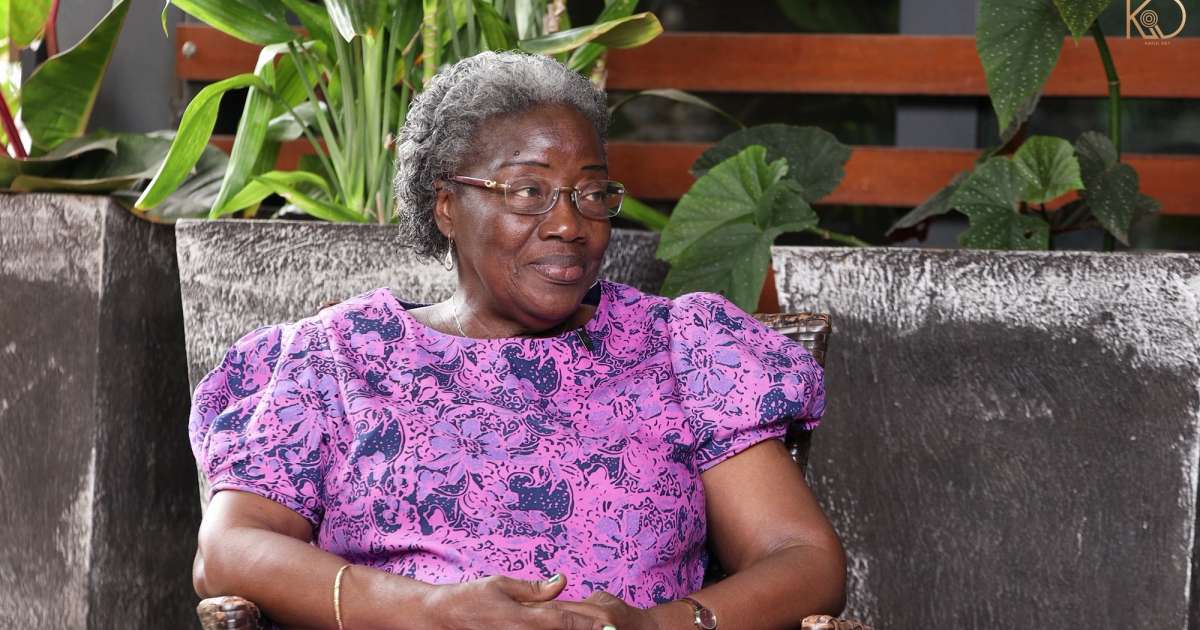
His wife, Mrs Matilda Amissah-Arthur, says the decision surprised some people because her husband was a committed member of the National Democratic Congress (NDC), but politics was never what defined him.
“He said no about two times before he agreed,” she told Kafui Dey in an interview.
“So, what made him hesitate”? Kafui Dey asked
Mrs Amissah-Arthur says her husband was first and foremost a technocrat.
“You know typically for those of you who know he’s a technocrat. He was a pure technocrat,” she said.
Although he was a “core NDC member”, she explained that he was not the kind of politician who spent his life positioning himself for political office.
“My husband was not your typical politician. He was a technocrat.”
For him, the vice presidency was therefore not something he had been working towards.
“He wasn’t looking up to that,” she said.
The opportunity came after the death of President John Evans Fiifi Atta Mills, when then-President John Dramani Mahama needed a new running mate.
That was when Amissah-Arthur’s name entered the picture.
But even then, according to his wife, he did not immediately embrace the offer.
Eventually, however, he said yes.
And when he took office, he was not entering government as a political newcomer.
Mrs Amissah-Arthur pointed out that her husband had already spent 12 years as Deputy Minister of Finance and five years as Governor of the Bank of Ghana.
“So for him going to vice presidency it was a big jump but then he knew a lot about the system,” she explained.
That experience, she said, made his transition into the office easier because he already understood how government worked.
But when asked about the main thing her husband wanted to achieve as Vice President, Mrs Amissah-Arthur did not point to a political slogan or campaign promise.
She pointed to an idea he repeatedly talked about: homegrown solutions.
“He kept saying that he wanted Ghana to use homegrown solutions and stop depending on foreign solutions.”
It was an idea that mattered so much to him that it continued after his death.
Mrs Amissah-Arthur said the family later instituted a lecture series held every five years, where speakers discuss the importance of developing and using local solutions to solve Ghana’s problems.
For her, that was a reflection of the kind of man her husband was.
He may have eventually occupied one of the country’s highest political offices, but she says he never really became a politician in the traditional sense.
He remained a technocrat who happened to find himself at the centre of Ghanaian politics.
And perhaps that explains why it took two “no” answers before the eventual “yes”.