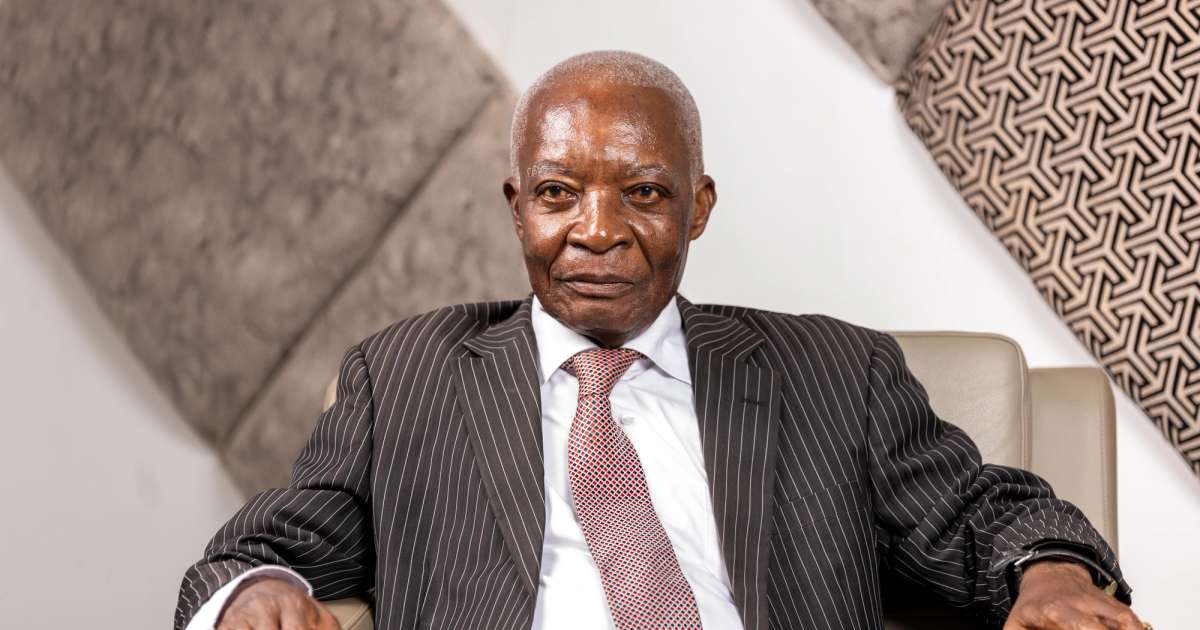
Former DVLA boss insists he sought approval for $3.6 million, questions how $9.9 million appeared on the contract and says the nine-year ordeal took a toll on his health and reputation.
“What was the contract sum?”
That was the question Justice Mɔpkɔkpɔ Yao Amegashie says he was asked when he appeared before investigators from the Economic and Organised Crime Office (EOCO) in July 2014 over the controversial Driver and Vehicle Licensing Authority (DVLA) contract with Foto X.
His answer, he recalled, was straightforward: GH¢3.6 million.
But that figure would become the centre of a controversy that followed him for years, after a contract document he was later shown reportedly carried a different amount of GH¢9.9 million.
Now, in an interview with Kafui Dey, the former DVLA chief executive has revisited the controversy, giving a detailed account of the procurement process and insisting that he did not change the contract sum.
“I said 3.6.million. Are you sure? I said yes, 3.6,” Mr. Amegashie recalled of his encounter with EOCO.
He said investigators subsequently told him that he could be charged with causing financial loss to the state.
“Me?” he recalled asking, adding that he requested that his lawyer be present before proceeding with the questioning.
THE GH¢3.6M APPROVAL
Mr. Amegashie traced the controversy to 2012, when the existing contract between the DVLA and Foto X, which had been signed in 2006, was approaching its expiration.
He said the agreement was due to expire on June 10, 2012, and that steps had to be taken to secure an extension or a new contract.
According to him, he established a technical committee made up of representatives from the DVLA, the Ministry of Transport, the Controller and Accountant-General’s Department, the Ministry of Finance and the National Information Technology Agency to examine the proposal.
The committee submitted its report before management held meetings on May 11 and May 14, 2012. Further discussions took place on August 1, ahead of the signing of the contract on August 2.
Amegashie said he sent a request to the Public Procurement Authority (PPA) on May 16, 2012, seeking approval for $3.6 million.
He maintained that the approval, dated June 7 and received at the DVLA on June 12, reflected the same amount.
“The amount that was approved, which was requested for first, was GH¢3.6 million. The approval that was given was GH¢3.6 million — the same figure,” he said.
He explained that he forwarded the approval to the head of procurement for immediate action because the existing contract had already expired.
His concern, he said, was that drivers could be left with expired licences, potentially exposing them to problems with insurance companies and the police.
“The contract was expiring on 10th June, and we received the letter on 12th June. So we are two days later already,” he said.
He added that he wanted the process expedited because drivers whose licences had expired could face serious consequences if involved in road crashes.
SO, WHERE DID GH¢9.9M COME FROM?
The former DVLA boss said his understanding of the contract sum remained $3.6 million until he was later shown a document indicating $9.9 million.
He said the document appeared genuine on its face, prompting him to raise the matter with the Public Procurement Authority.
“When I went to the ministry and they showed me that $9.9 million, I said, ‘Ah!’” he recalled.
Mr. Amegashie said he went straight to the PPA to report what he had seen.
According to him, officials at the authority searched for the document but could not find their copy.
“They went looking for the document. They couldn’t find the document. They didn’t have a copy of the document,” he said.
He added that an official questioned why the procurement officers could not locate a document that should have been submitted to the authority before approval and again after the contract was signed.
For Amegashie, the discrepancy raised serious questions about how the figure changed and who was responsible.
He was emphatic about his own role.
“It’s not me who changed the figure,” he said.
He added: “If I had seen that it was $9.9 million, I would have stopped it.”
‘HOW COULD I ALONE DEAL WITH IT?’
Mr. Amegashie also questioned claims by some management officials that they had no knowledge of the contract.
He argued that the transaction involved several departments and could not reasonably have been handled by the chief executive alone.
“Is it possible that management, who were implementing the contract from 2006 to 2009, when I came in and the contract was about to expire or be renewed, I alone will deal with the service provider without management?” he asked.
He pointed to the involvement of officials responsible for management information systems, driver training and licensing, finance and procurement.
He said the head of procurement, who served as secretary to the entity tender committee, should have had access to the relevant records.
Amegashie recalled that after receiving an invitation from EOCO, he contacted the head of procurement to request copies of the committee’s minutes.
“He said he doesn’t have it,” Mr. Amegashie recalled.
He said the response alarmed him.
“How could the secretary to the entire committee say that he doesn’t have a copy of the minutes of the meeting that we attended?” he asked.
He said the situation made him question whether the figure had been changed by someone else, although his account does not independently establish who was responsible.
NINE YEARS OF STRESS
Beyond the disputed figures, Amegashie said the controversy had a devastating effect on his life.
He described the experience as particularly painful because he believed he had devoted much of his career to improving road safety and public institutions, only to have his reputation questioned at the end of his tenure.
“It was very devastating,” he said.
“You throw all your life into road safety to transform road safety, to establish road safety, and then at the end of your term, a scandal is thrown at you.”
He also criticized the public reaction, saying some media discussions and comments had condemned him before he could explain his side.
“Everybody condemned me. Some said I should be shot. Some said I should be castrated,” he recalled.
Amegashie said the matter dragged on for nine years, from 2014 until 2023.
Asked what he lost during that period, he responded: “Loss of economic opportunities and loss in health because I was going through a lot of stress.”
He said the pressure sometimes left him restless and affected his ability to work on his writing projects.
“I tried to control it, but then, you know, I feel restless,” he said.
Mr. Amegashie said EOCO eventually issued him what he described as an exoneration letter in 2023, bringing an end to the long period of uncertainty he had endured.
Years after the controversy first emerged, Mr. Amegashie’s central question remains: if he requested GH¢3.6 million and says that was the amount approved, how did GH¢9.9 million appear on the contract?
And, perhaps more importantly, who can account for the difference?