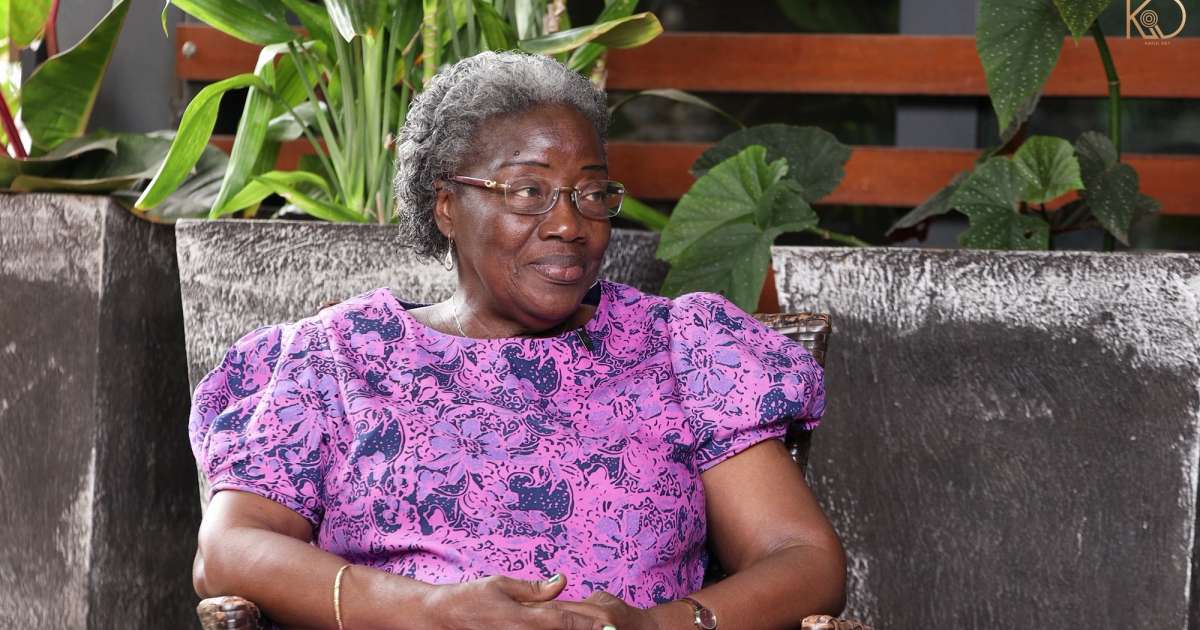
Mrs. Matilda Amissah-Arthur believes Ghanaian parents may sometimes love their children so much that they end up doing too much for them.
Speaking to Kafui Dey, the retired professional librarian reflected on parenting, responsibility and the tendency of parents to shield their children from everyday challenges.
“We are overprotective,” she said.
She illustrated her point with a story about her son when he was in Senior High School.
During one of his holidays, the family got him a holiday job at a photography company. The job was not far from home, but the parents soon became anxious about how he was managing.
They would drop him off and worry about him.
Then one day, they learnt that his boss had asked him to take money to the bank.
For Mrs. Amissah-Arthur, that immediately raised alarm bells.
“What if the money was lost or something?” she recalled thinking.
She even called the boss to question the decision.
But while the mother was worrying, her son appeared to understand something she was struggling to accept: he was learning.
“He works there. It’s not far from the house. He’s learning,” she said.
Her son was in his teens and, according to Mrs. Amissah-Arthur, he understood what he was being asked to do.
Looking back, she admitted that her fear was greater than the actual danger.
“He was okay. He understood but I was very afraid for him when I shouldn’t be.”
That experience changed the way she viewed the balance between protecting children and preparing them for adulthood.
She believes children should gradually be given responsibilities appropriate to their age.
“Not handling big monies but small monies and not at a very young age but at an age where they can understand.”
For her, responsibility is something children need to learn through practice.
Parents cannot always be there to make every decision, solve every problem or remove every obstacle.
At some point, children have to be allowed to try.
“Let them go. We should let them go.”
Her comments also reflect a wider theme that runs through her own life story.
As a child, she grew up around social welfare work because of her father’s involvement in the field. Abandoned children were sometimes brought to their home before arrangements were made for them to be placed elsewhere.
She recalled one boy who lived with the family for more than three months before eventually being placed in a home.
The family maintained contact with him.
Today, she said, he is a medical doctor.
For Mrs. Amissah-Arthur, children need care, but they also need exposure to life.
And sometimes the hardest part for a parent is not protecting a child from every possible danger, but knowing when the child is ready to take the next step alone.