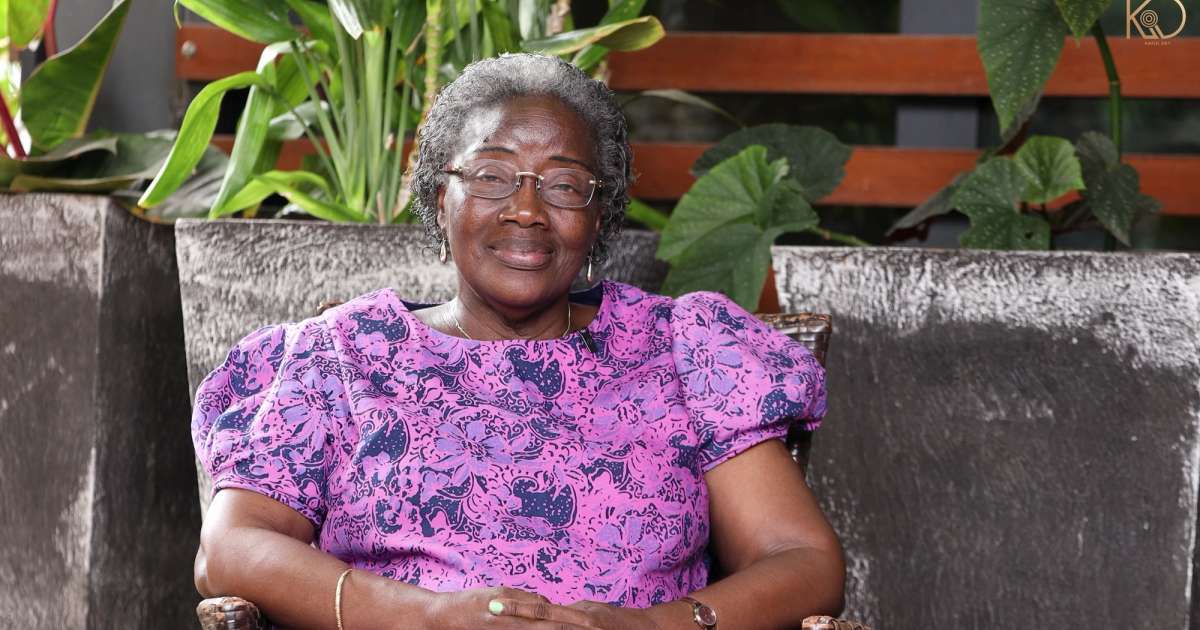
Despite concerns about the direction of society, Mrs. Matilda Amissah-Arthur says she has not given up on Ghana’s young people.
In an interview with Kafui Dey, she offered a hopeful message about the country’s next generation, while also placing responsibility on older generations and parents.
Her message was simple:
“We haven’t lost it.”
Mrs. Amissah-Arthur said she sees reasons to remain hopeful because of the young people she encounters through her work.
She has spent decades working with children, helping them develop reading skills and setting up libraries through her work with Reading for Life.
That experience has allowed her to interact with children from different backgrounds.
She also mentors women and continues to engage with young people through her speaking and other activities.
For her, the future of Ghana is not simply about what young people do.
It is also about what adults show them.
She believes the older generation has a responsibility to live properly because children learn from what they see.
The message is particularly important to her because she has seen the impact of mentorship firsthand.
During the interview, she spoke about former students and young people she had taught who later returned to tell her how something she said or taught them had influenced their lives.
Those moments, she said, give her joy.
She recalled meeting people who remind her of lessons she taught them years earlier.
Sometimes, she said, she does not even remember the person or exactly what she taught them.
But they remember.
And when they return with their own children, she finds it deeply fulfilling.
“I’m filled with joy when I said, ‘What are you doing?’”
For Mrs. Amissah-Arthur, that is part of the evidence that positive influence can travel across generations.
She believes there are institutions and individuals doing good work with young people.
But parents also have a role to play.
In another part of the interview, she argued that many parents are too busy working and meeting financial obligations to spend enough time talking to their children.
She said children sometimes fail to see their parents as people they can openly speak to.
As a result, they may turn to their peers, who may themselves provide poor advice.
Her solution is not complicated: parents need to make time for their children.
“Find time for your children.”
She said her own children remain close to her and still come to her for advice, describing them as friends.
That relationship, she believes, is important.
For Mrs. Amissah-Arthur, hope for Ghana therefore begins with relationships — parents who listen, adults who model good behaviour and institutions that invest in children.
She does not suggest that everything is perfect.
But she refuses to believe that the country’s problems mean the younger generation has been lost.
“We haven’t lost it.”
For someone who has spent decades working with children, the statement is more than optimism.
It is rooted in the people she has encountered and the lives she says she has watched develop over the years.
Her message to the older generation is equally clear: the future is being shaped by what adults do today.