Bernhardt Ago Sowa Kuma’s Friend Was Sent Away During Exams and Died Five Days Later
By: Roberta Gayode Modin
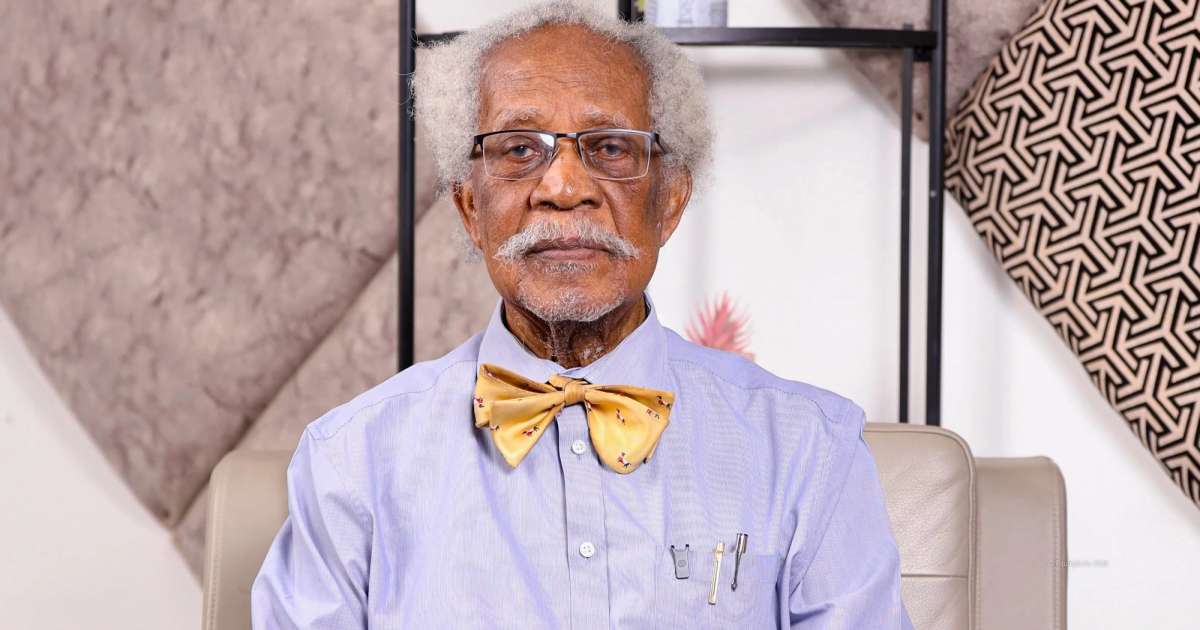
More than eight decades have passed, but there is one memory orthopaedic surgeon Mr. Bernhardt Ago Sowa Kuma has never been able to forget.
He was a student at Achimota School in the 1940s, growing up in an institution where colonial rule shaped almost every aspect of daily life. Looking back, the 94-year-old says the inequalities between European staff and their African counterparts were impossible to ignore.
“When he came to Achimota in 1944,” Mr. Kuma recalls, referring to a newly appointed European official, “a brand-new car had been bought for him.”
The contrast, he says, became even more painful the following year.
“Four African teachers applied to be given loans to buy cars, and they were all rejected.”
To the young students watching, it was another reminder of who mattered and who did not.
“The bursar was an Englishman,” he says. “The lady in charge of the hospital was an English woman, and the one in charge of cooking for us students was also an English lady.”
But it was one incident inside the school hospital that left the deepest scar.
The entire school was sitting for its School Certificate examinations when one of Mr. Kuma’s classmates fell seriously ill. Concerned, the student went to the school hospital seeking medical attention.
Instead of receiving care, he was turned away.
“The matron of the hospital, an English lady, threw him out,” Mr. Kuma says quietly. “They thought he was play-acting… dodging the exams.”
Three days later, the boy’s condition had deteriorated dramatically.
“He disappeared,” Mr. Kuma recalls. “He was quickly put in a car and sent to Korle Bu.”
It was already too late.
“Five days later, he was dead.”
The memory still unsettles him.
For Mr. Kuma, the tragedy was more than the loss of a schoolmate. It became a painful symbol of the unequal treatment that many Africans experienced under colonial administration.
“It appears the British… the Europeans didn’t treat the Africans too nicely,” interviewer Kafui Dey observed.
Mr. Kuma did not hesitate.
“No, no, no, no,” he replied.
The pain in his voice was not driven by anger, but by remembrance. More than 80 years later, he still remembers a classmate who sought help during one of the most important examinations of his life, only to be dismissed as someone pretending to be sick.
His story is not just about colonial-era inequalities. It is about a young life that might have been saved if compassion had come before suspicion.