Twelve hours was what her mother had been told to expect. But as the hours passed and there was still no sign of the doctors, anxiety began to grow.
What was supposed to be a lengthy operation had stretched to 17 hours.
For breast cancer survivor Dorothy Amuah, the procedure involved much more than removing a cancerous breast. Doctors also had to reconstruct it using tissue and muscle taken from her abdomen in a complex operation that left her mother and family waiting anxiously.
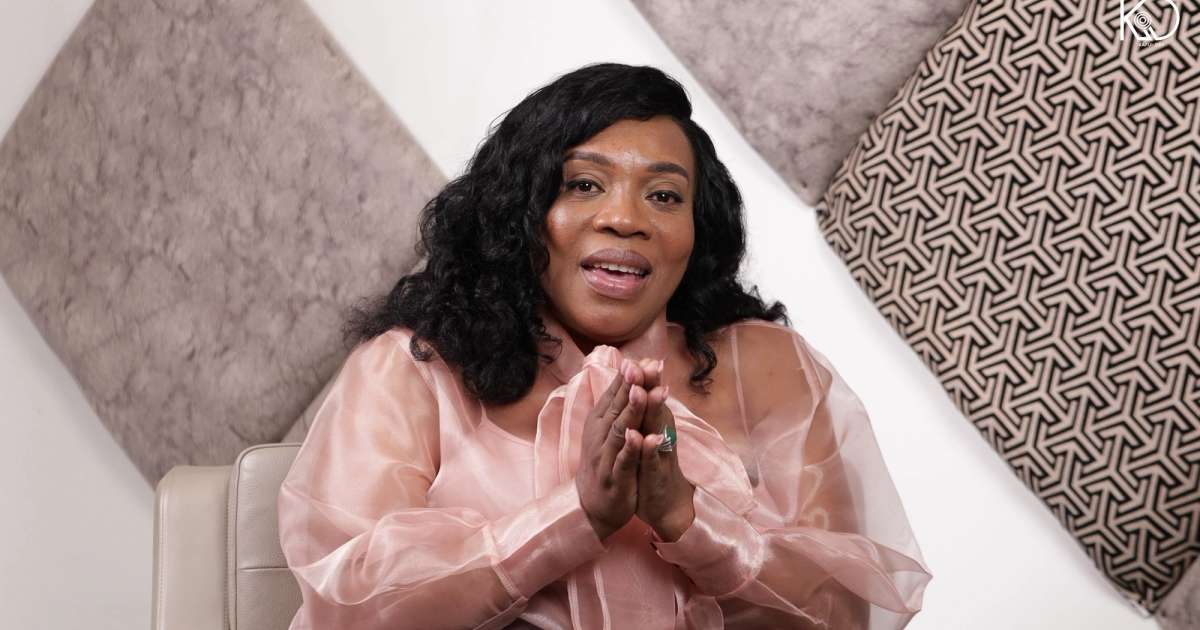
In an interview with broadcaster Kafui Dey, Amuah gave a detailed account of the surgery, explaining why doctors ruled out removing only the lump and how they used tissue from her stomach to rebuild her left breast.
At 29, Amuah had been diagnosed with stage three breast cancer. Further examinations revealed that the cancer had also affected her milk ducts, making a lumpectomy — a procedure that removes the cancerous lump while preserving the breast — unsuitable in her case.
She said one doctor had initially advised her to consider removing only the lump. However, after consulting another specialist, she was warned that the cancer was aggressive and that removing the lump alone could make it difficult to achieve clear margins.
The concern, she explained, was that cancer cells could remain in the breast if the affected tissue was not completely cleared.
“He was like, ‘You know what, this is so aggressive. I don’t advise you to do that because it’ll be very hard to take the lump out and clear all the margins with it being in the ducts, that you may end up leaving one cancer cell there,’” she recounted.
The recommendation was a mastectomy, which involves removing the breast.
After consulting about three doctors, Amuah eventually met Dr Michael Moore of Columbia Presbyterian, who worked alongside plastic surgeon Dr Ted Shaglazian to carry out the procedure.
But the operation was not going to end with the removal of her breast.
Rebuilding the breast with tissue from her stomach
Immediately after the mastectomy, the surgeons proceeded with a reconstructive procedure known as a TRAM flap.
Amuah explained that the procedure involved taking skin, tissue and muscle from her abdomen, together with the connected blood vessels, and using them to reconstruct her breast.
She said surgeons removed about six inches of tissue from her stomach before transferring the tissue and muscle to her chest.
“They took out a chunk of tissues and muscles from my stomach with all the blood vessels connected still. It’s microsurgery. And then they use that to do the reconstruction of the breast,” she explained.
The abdominal muscle was transferred to her chest and secured beneath the reconstructed breast, while the skin and tissue taken from her stomach were used to rebuild the breast itself.
She described how the muscle was positioned internally to provide support for the reconstruction.
“They took it out and they feed it into your chest and they wrap it and tie it and secure it through under the breast,” she said.
The procedure was not the only reconstruction option available to her. Amuah said she had also been offered the option of using an implant but was reluctant to introduce a foreign material into her body after everything she had already endured.
She was also told tissue could be taken from other parts of the body, including the shoulder or buttocks.
However, she preferred the stomach option because she did not want the resulting scar in those other areas.
“At least this is hidden,” she said, explaining why she chose the TRAM flap procedure.
The operation that lasted 17 hours
Although Amuah had spent considerable time discussing treatment options and dealing with insurance arrangements, she said the reality of the operation only fully hit her as she was being wheeled into the operating theatre.
Her preferred surgeon was not covered by her insurance plan, meaning she eventually had to pay out of pocket for the procedure.
On the morning of the surgery, she recalled being placed on a cold operating table as her mother held her hand and prayed.
Then the surgeon arrived with a black marker and began drawing lines across her body to indicate where the incisions would be made.
She compared the experience to being marked up like a chopping board.
As she watched the surgeon draw the lines, she began to realise the magnitude of what she was about to undergo.
“I realized I could possibly not even come out of surgery,” she recalled.
She was subsequently given anaesthesia and lost consciousness.
Amuah said she had no recollection of what happened during the operation. But her mother, who had been told to expect a 12-hour procedure, became increasingly worried when it continued for much longer.
The operation eventually lasted 17 hours.
“My mother was there. She was told the surgery would take 12 hours, but it ended up taking 17 hours,” she said.
She remembered that people were worried as they waited for the doctors to emerge.
When the surgeons eventually came out, one of them reportedly explained the care required to reconstruct what had been removed.
Amuah recalled the doctor’s words: “It’s very easy to destroy something, but it’s very hard to put together something that was so beautiful.”
The surgeon, she said, apologised for the length of the operation, explaining that they had needed to do a good job for her.
After 17 hours, she finally came out of surgery.
The painful recovery
Surviving the operation was only the beginning of another difficult phase.
Amuah said she woke up in considerable pain, despite the painkillers administered to her.
The removal of tissue and muscle from her abdomen had also changed her posture and affected her ability to stand upright.
She explained that it took months to retrain her body to stretch again. For a couple of months, she remained hunched over because of the changes to her abdominal muscles.
She also had drainage tubes attached to her body to remove excess fluid, with medical staff teaching her how to manage them.
Despite the discomfort, Amuah said she was discharged after a short hospital stay.
Her recovery journey would continue, but she had already made it through an operation that lasted almost an entire day.