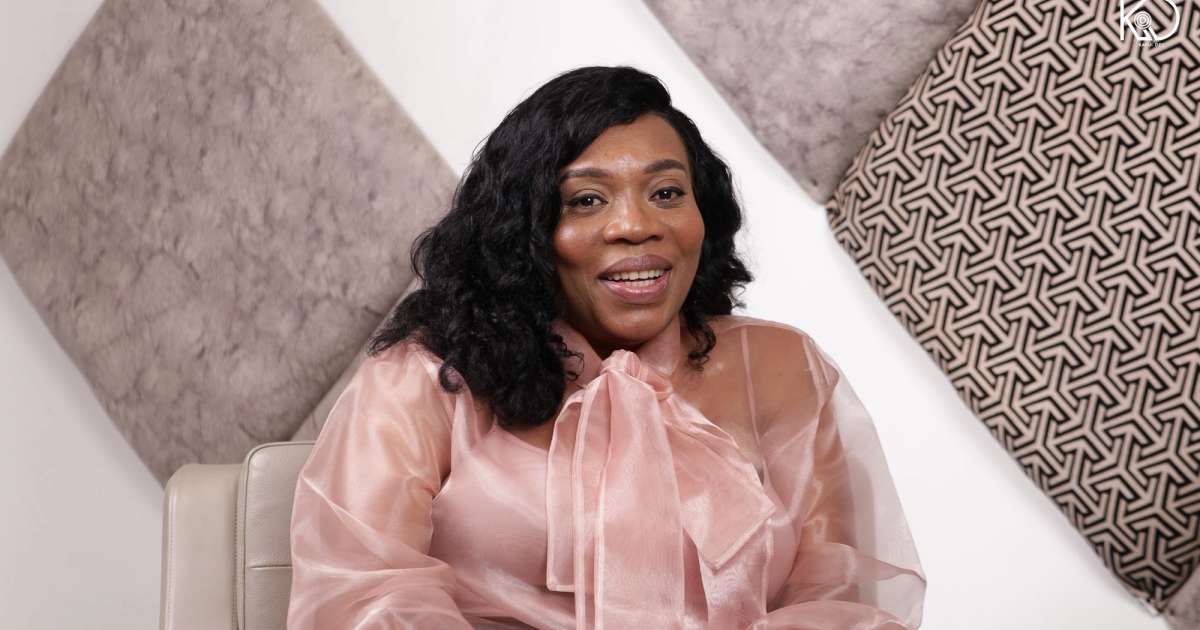
For a woman whose confidence had been shaped by her appearance, career and sense of identity, looking at her body after a mastectomy was an experience she had never imagined she would have to confront.
When the bandages were finally removed following reconstructive surgery, Dorothy Amuah says she was confronted with a sight that left her shocked and emotional.
There were stitches, staples and scars across her body. What she saw was a painful reminder of the battle she had just endured.
“I remember seeing it and thinking, my God, what have they done to me,” she recalled.
Amuah is a prominent Ghanaian entrepreneur, professional optician, philanthropist and breast cancer advocate. She is the Chief Executive Officer of Chic Optique, Base Dynasty and Base Lounge.
Beyond her business interests, she has become an influential voice in breast cancer advocacy, using her personal experience to encourage awareness and support for women navigating the disease.
In an interview with broadcaster Kafui Dey, she opened up about how breast cancer and the surgery that followed affected her perception of her body and her sense of womanhood.
At the time of her diagnosis, Dorothy was 29 and at the height of her career. She was still modelling and building her professional life when the news that she had breast cancer changed everything.
The surgery involved removing her left breast, followed by a complex reconstructive procedure.
Although the operation restored the appearance of her breast, the initial sight of the surgical wounds was difficult to process.
“I think I shed a tear or two,” she said.
For years, she explained, looking in the mirror brought back memories of what she had endured.
“You want to forget about it, but you’re constantly reminded when you see your scars. Even now, okay, it’s better now, but for years, you’re constantly reminded of what you’ve endured. It’s tough,” she told Kafui Dey.
But beyond the physical scars was another challenge: confronting how the experience might affect her identity as a woman.
Asked directly how the surgery affected her sense of womanhood, Dorothy credited the support she received from Dixon, the father of her children, for helping her navigate that difficult period.
She said he never made her feel different because of what had happened to her body.
“He was really supportive in the sense that he didn’t make me feel different,” she recalled.
His reassurance helped her maintain her confidence and understand that losing a breast did not take away her femininity.
“He made me feel fine. I still felt like a woman,” she said.
Dorothy added that she gradually came to terms with her changed appearance as she recovered from the surgery.
Part of her reconstruction journey also involved recreating her nipple, which had been removed during the mastectomy. She later underwent nipple and areola tattooing to complete the reconstruction.
For her, the experience was not simply about restoring the physical appearance of her breast but also about becoming comfortable with her body again.
Looking back, Dorothy says breast cancer has never defined who she is.
In another emotional reflection during the interview, she explained that surviving the disease gave her a sense of purpose, particularly in helping other women understand the importance of breast cancer awareness and early detection.
She believes her experience was an opportunity to share her story and contribute to saving lives.
Asked what cancer took away from her and what it gave her, Dorothy maintained that the disease did not change her identity.
“I’m still me. It doesn’t define me in any way whatsoever. It’s just one chapter in my life,” she said.
She had a message for other women who may be struggling with the physical and emotional consequences of breast cancer.
“It doesn’t define me in any way whatsoever. And it shouldn’t define anybody. You know, you’re no less of a woman.”
For Dorothy, the scars may remain as reminders of a difficult chapter, but they do not determine her worth, femininity or identity.