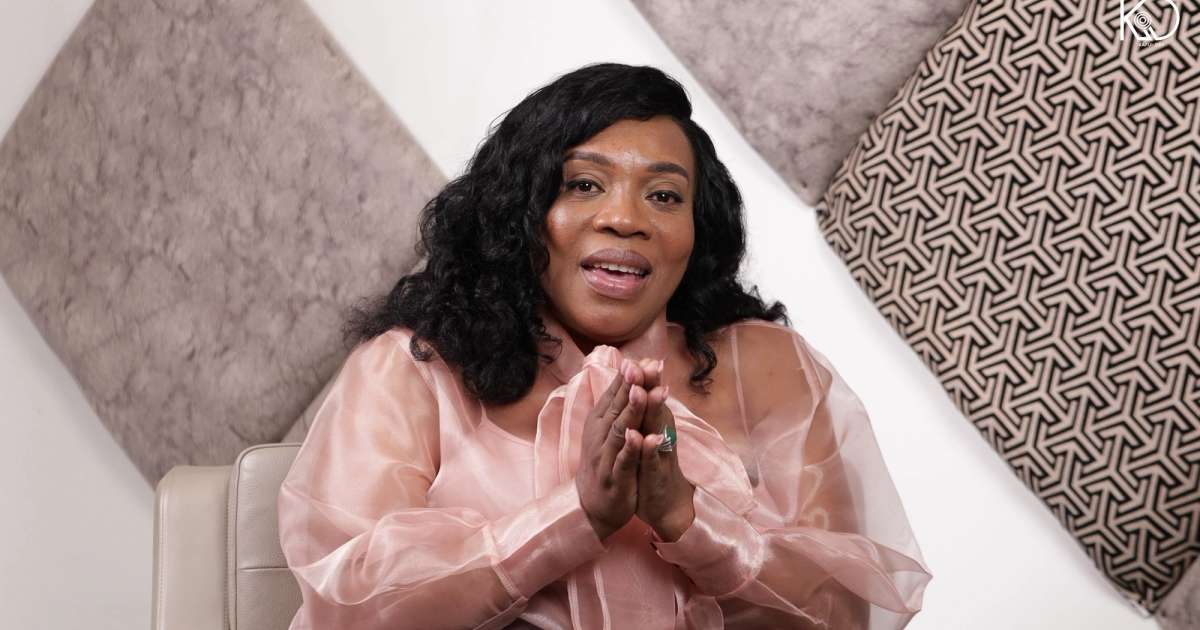
For many women, the first sign that raises concern about breast cancer is a lump in the breast. But what happens when there is no lump to feel?
It is a question breast cancer survivor and advocate Dorothy Amuah wants more women to consider, warning that the absence of a noticeable lump does not necessarily mean the disease is absent.
“Breast cancer can exist without a lump,” she stressed during an interview with broadcaster Kafui Dey.
Mrs. Amuah, a prominent Ghanaian entrepreneur, professional optician and philanthropist, is also the Chief Executive Officer of Chic Optique, Base Dynasty and Base Lounge. Having survived breast cancer herself, she has become an influential advocate for awareness, screening and better access to cancer care.
During the interview, she challenged what she described as the widespread emphasis on breast lumps as the primary warning sign of the disease.
“There’s a lot of talk about lump, lump, lump. You know, breast cancer lump. Breast cancer can exist without a lump,” she said.
She was quick to point out that finding a lump does not automatically mean a woman has breast cancer either.
“And having a lump does not necessarily mean it’s breast cancer,” she explained.
For Mrs. Amuah, the distinction is important because women who rely only on physical examination for a lump may overlook the need for other forms of screening.
She explained that breast cancer can be detected at an early stage, before a lump becomes noticeable, making mammograms an important part of early detection.
“You can catch breast cancer at a very early stage and it’s not yet a lump. That’s why it’s important to do the mammograms so that the machinery can catch it early,” she said.
Her warning is informed by her own experience with the disease.
Amuah was diagnosed with breast cancer at 29, after her husband discovered a lump in her left breast. Further medical examinations revealed that she had stage three cancer, and she eventually underwent a mastectomy.
Reflecting on what an earlier diagnosis could have meant for her, she told Kafui Dey that her breast might have been saved and she might not have needed chemotherapy if the cancer had been detected at stage one.
“The earlier you catch it, the better,” she said.
She also encouraged women to take their screening seriously rather than treating breast cancer awareness as a seasonal campaign or simply wearing pink during awareness month.
In an earlier part of the interview, she expressed concern that some people participate in breast cancer awareness activities without taking the practical step of getting screened.
She urged women to understand their family medical history and seek professional guidance on when to begin screening. Amuah also advised those with a family history of cancer to consider starting screening earlier.
For her, awareness must go beyond conversations. It must translate into action.