
General
The Father Who Never Went to Secondary School but Educated an Entire Generation
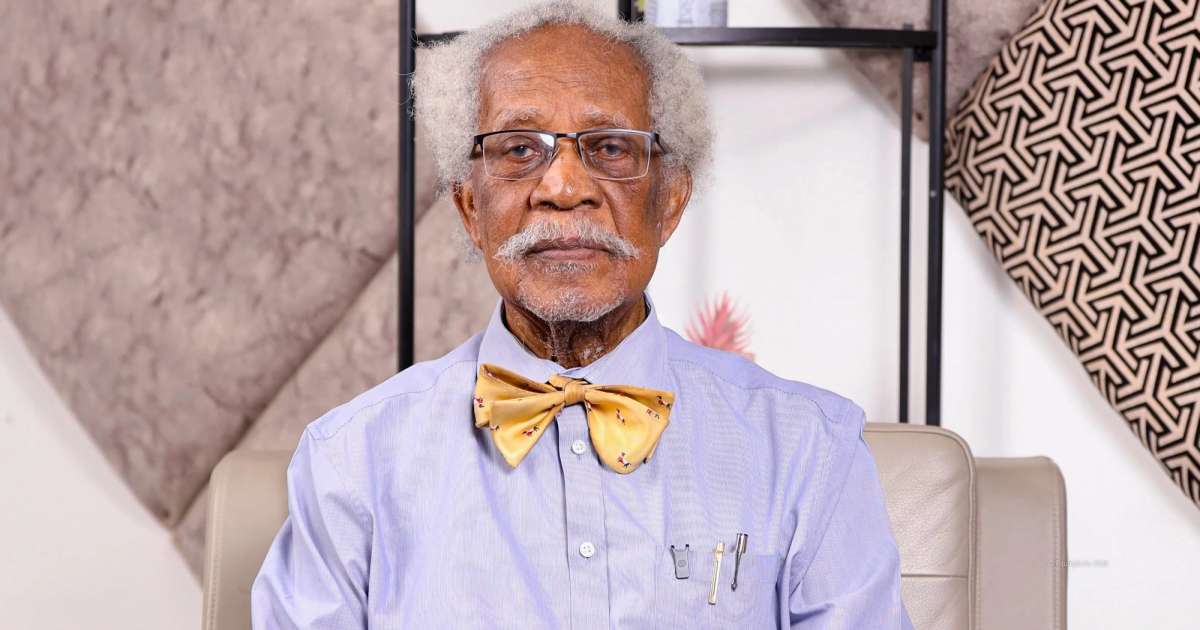
Mr. Kuma gives his father immense credit because he understood what it meant to lose an educational opportunity.
By Roberta Gayode Modin·
Related Content
General
Mr. Kuma gives his father immense credit because he understood what it meant to lose an educational opportunity.
Related Content
Bernhardt Ago Sowa Kuma’s journey to becoming one of Ghana’s pioneering medical figures was not built on his achievements alone. Behind his success was the quiet sacrifice of a father who never had the opportunity to pursue secondary education but believed deeply in giving his children the chances he never had.
Professor Kuma grew up in a family of seven children; four boys and three girls in a home where education was valued and every child was cared for.
“My father was a civil servant. My mother was an ordinary housewife,” he recalled in an interview with Kafui Dey.
As the third child, he remembers a childhood shaped by discipline, love and parental support.
“We were well looked after by our parents,” he said.
But beyond providing for his family, his father’s own life story became one of the strongest lessons he carried with him.
Mr. Kuma gives his father immense credit because he understood what it meant to lose an educational opportunity.
His father was the sixth child in his family. When his own father died while he was still in elementary school, circumstances changed dramatically.
“He was the son of six when his father died,” Professor Kuma explained.
With his mother left to care for him, the possibility of continuing his education became uncertain. Secondary school, which could have opened new doors for him, was no longer within reach.
“I think the question of secondary school was literally out,” he said.
But although his father never sat in a secondary school classroom himself, he carried a powerful belief: education was the inheritance he could give his children.
“He didn’t tell me, but he indicated that it was a good thing to educate your children,” Professor Kuma reflected.
That belief became a guiding principle in his own family. Years later, he ensured that all his children received an education.
“All my four children went to school just like you,” he said.
His father’s impact was so profound that even after his death in 1968, the family recognised the role he had played not only as a parent but as someone who had changed the trajectory of generations.
Professor Kuma and his elder brother came together to honour him with a fitting burial.
“When he passed away in 1968, my senior brother and I, we got together. We said, ‘Well, look, let us give our father a decent burial,’” he recalled.
But during those preparations, his father’s youngest brother reminded them of something deeper, that the man they were mourning had been more than just an elder brother.
“He was your father and he was our brother, but at the same time he was our father,” the uncle told them.
The reason was simple: their father had taken on responsibilities that extended beyond himself.
For Professor Kuma, the greatest lesson from his father was not something spoken loudly. It was demonstrated through action: that education is one of the greatest gifts a parent can leave behind.
A father who could not continue his own education ended up educating an entire generation.
More Stories

